Major Public Memorials
& Community Works
Every community has people, characters and stories that deserve to be remembered.
Val May Studio works with councils, RSLs and community groups to uncover those stories and transform them into engaging public artworks that belong to the place and the people who live there.
Our sculptures are created to move people. They have movement, meaning and heart. They tell stories people can feel, connect with and remember, creating artworks that people return to time and again.
The result is more than a sculpture. It can become a landmark, a gathering place and a lasting symbol of community pride, bringing people together while giving visitors a reason to stop, explore and discover what makes the town unique.
In this way, a powerful local story can become part of a community's identity and contribute to cultural tourism, creating something meaningful for the people who live there and memorable for those who visit.
What story could your community bring to life?
Val May Studio’s heritage body of work includes significant public artworks created to honour history, celebrate achievement and preserve important stories for future generations. Val May Studio also undertakes private commissions and restoration works.
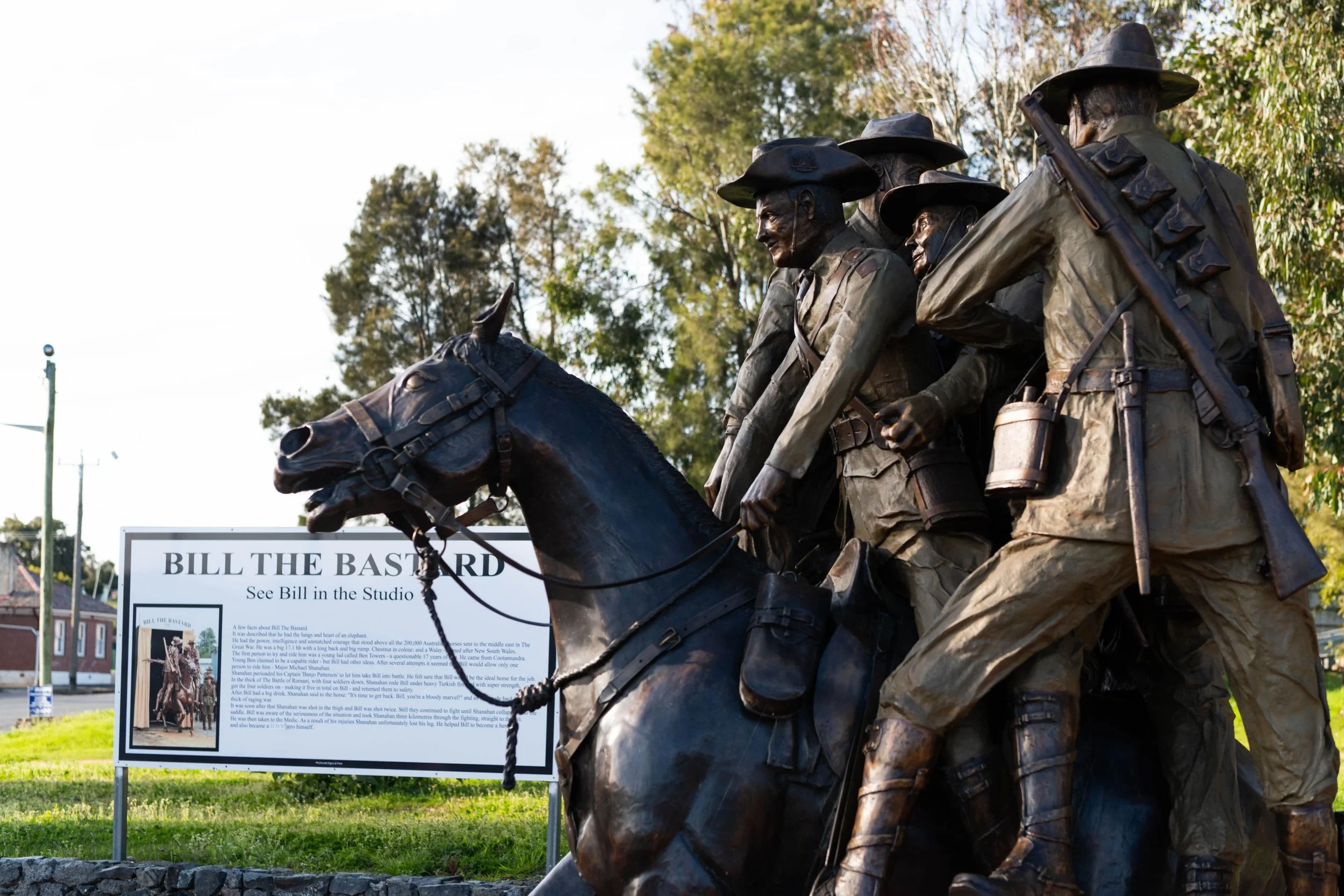
Bill the Bastard Monument - Harden-Murrumburrah, New South Wales
The studio’s body of work includes the life-size bronze Bill the Bastard Monument, honouring the legendary Australian World War I warhorse and the bravery of Major Michael Shanahan, who saved four troopers during the conflict.
The monument has become an important Australian memorial, capturing a story of courage, loyalty and resilience. READ MORE
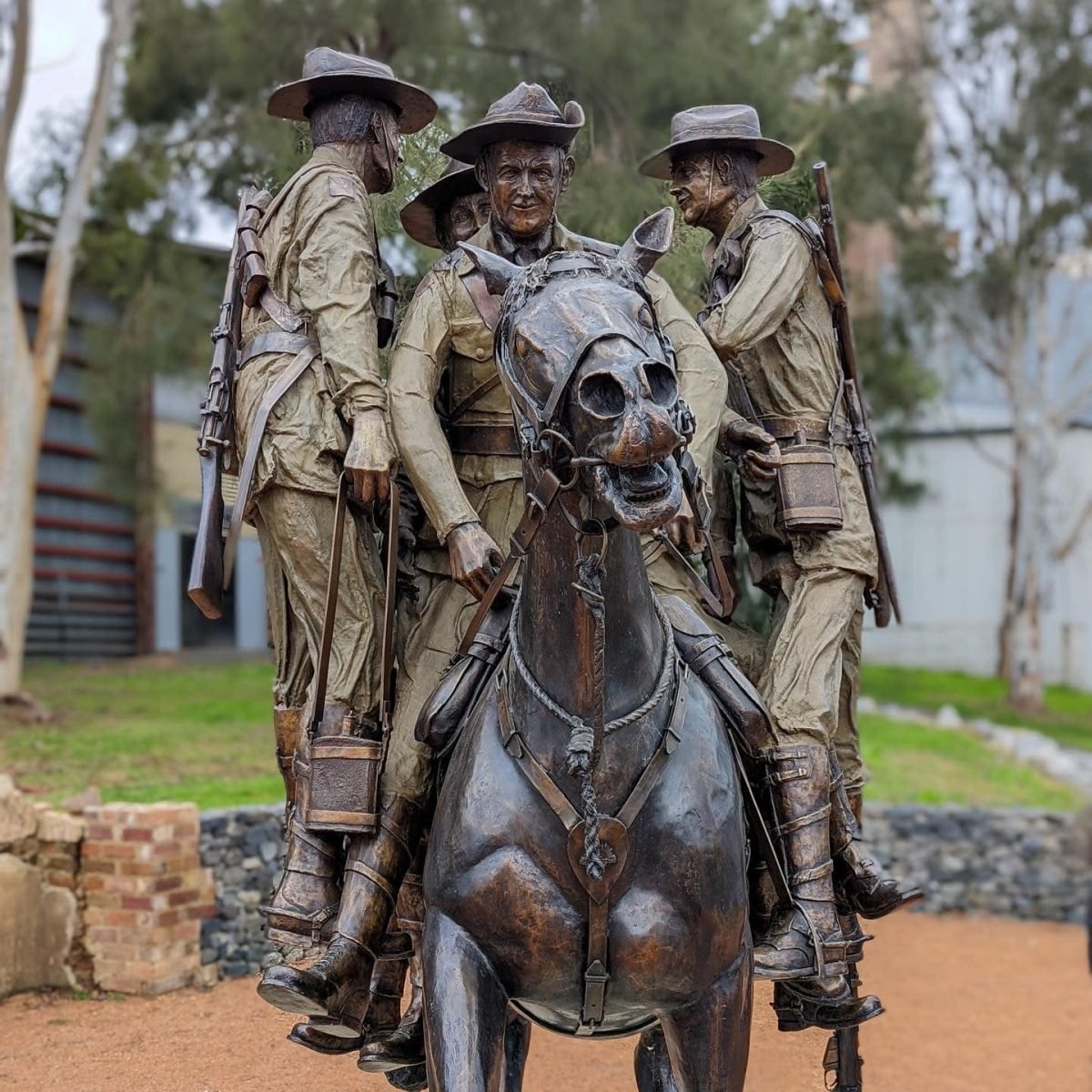
Australian Light Horse Memorial Works - Murrumburrah, New South Wales
Val May Studio’s heritage includes the creation of significant Australian Light Horse memorial works, preserving the stories of service, sacrifice and courage.
These works reflect the studio’s commitment to creating public art that connects communities with history.
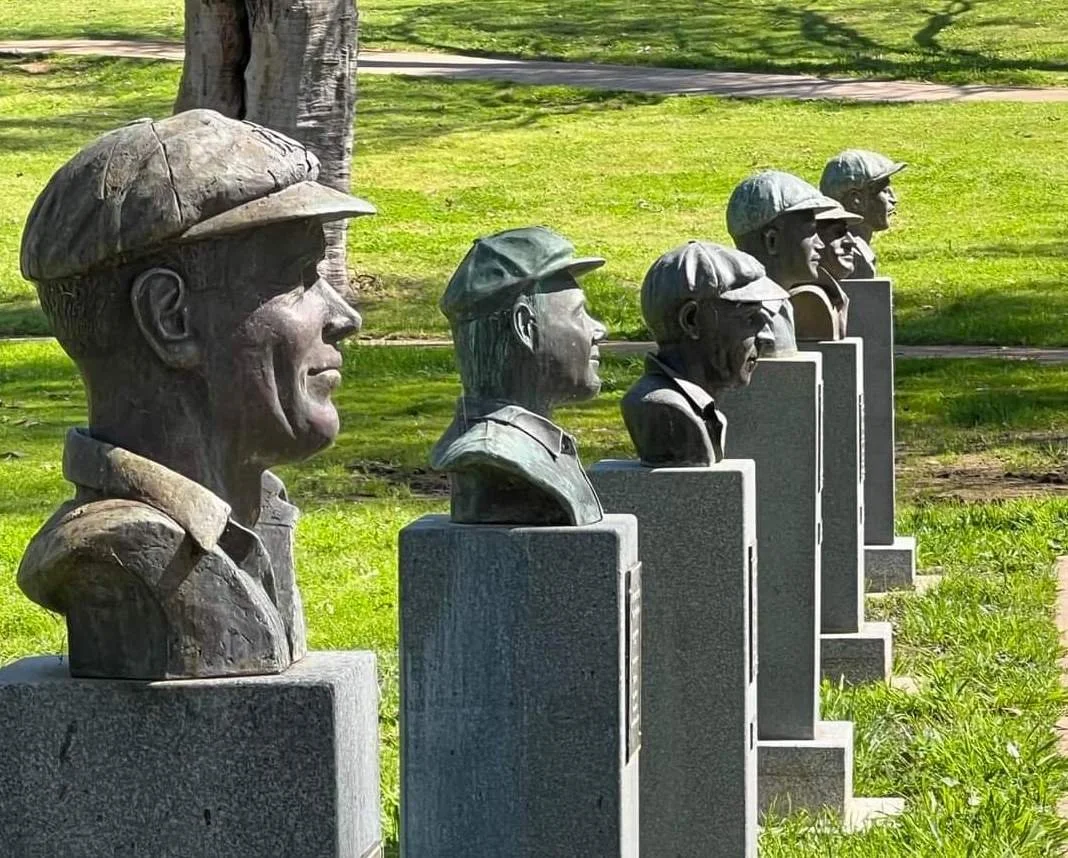
Australian Cricket Captains’ Walk - Cootamundra
New South Wales
Val May Studio’s heritage body of work includes the complete creation of the Australian Cricket Captains’ Walk in Cootamundra.
The project celebrates Australia’s cricket history and honours the achievements of the nation’s cricket captains through a series of sculptural works.
The Australian Cricket Captains’ Walk reflects the studio’s ability to deliver complete public art projects, from concept and design through to craftsmanship and installation, creating works that become part of a community’s identity and story.
The Story of Boofhead
Temora. NSW
Val May Studio creates public artworks that capture the imagination, celebrate local stories and become part of the identity of the communities they inhabit.
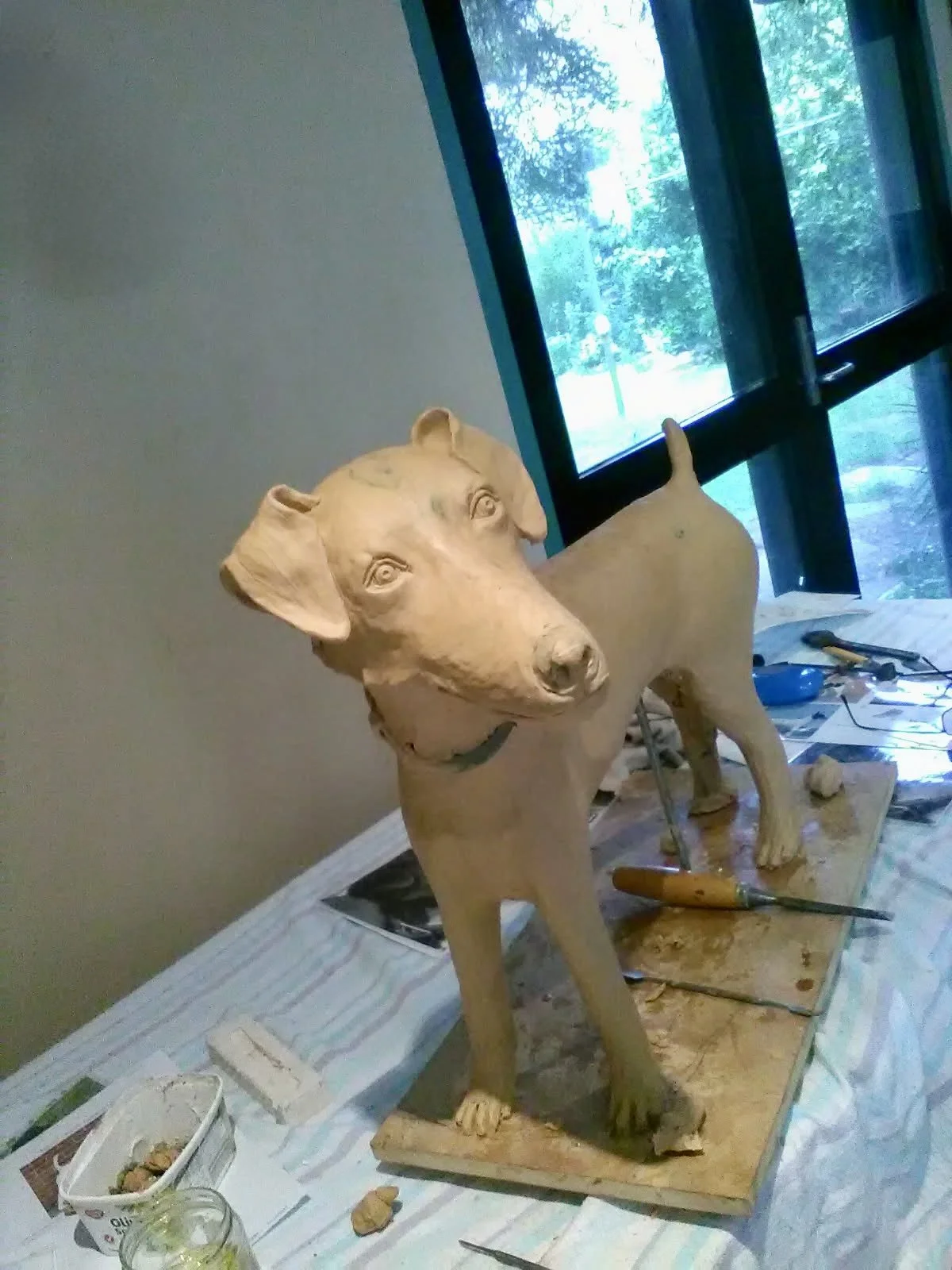
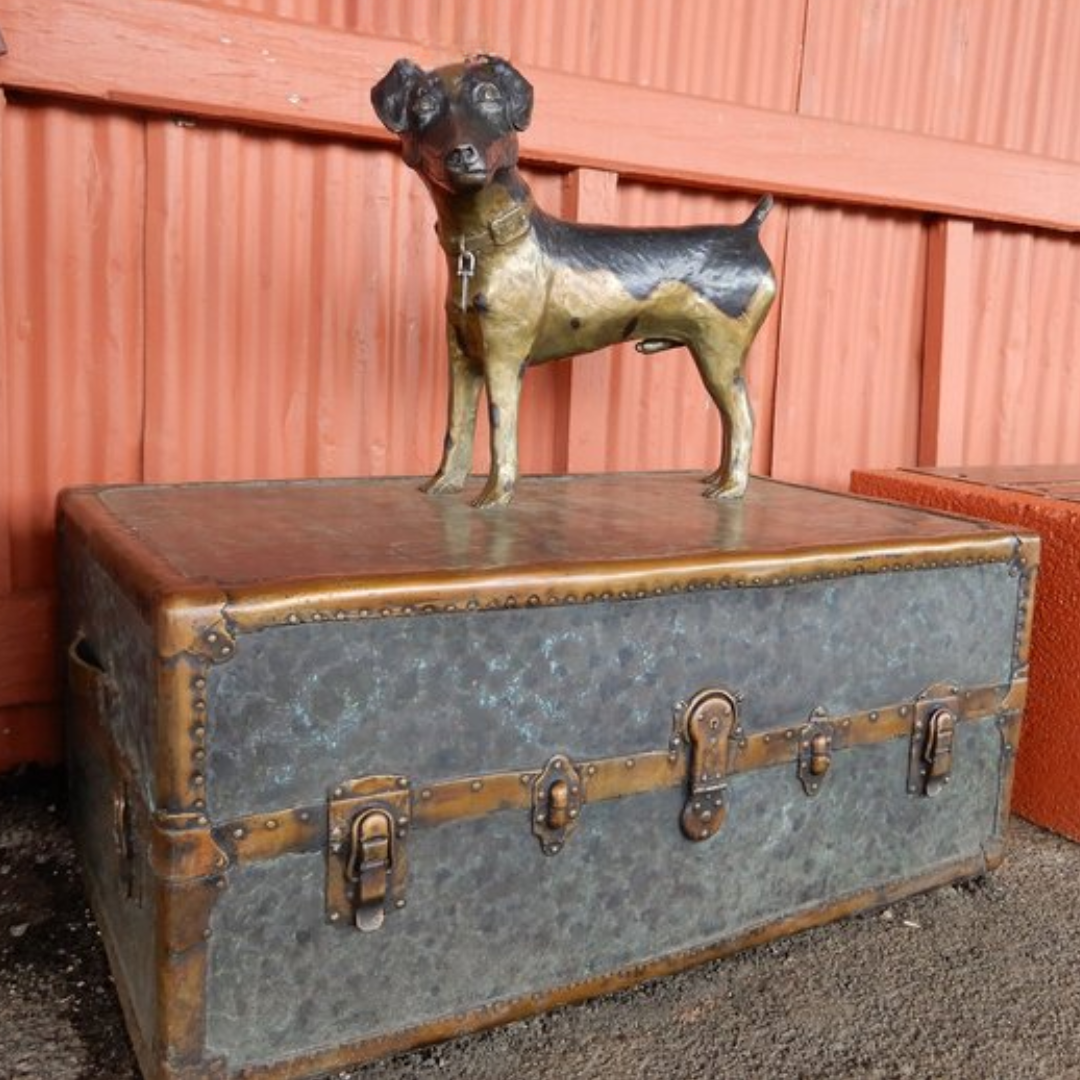
Boofhead, Temora’s much-loved railway dog, is one such story. A legendary local character, Boofhead became known for his love of trains and his habit of wandering freely around town, charming railway workers, families and locals along the way.
Today, Boofhead’s story has been brought to life in bronze at Temora Railway Station. The much-loved dog is captured standing proudly on an old railway luggage chest, both Boofhead and the chest designed and created in bronze by Val May Studio.
The sculpture has become more than a memorial. It is a meeting point, a photo opportunity and a reason for visitors to stop and discover the story behind the character. Families and travellers seek out Boofhead, helping connect Temora’s history with the experience of visiting the town today.
The Story of Marie Narelle
Temora. NSW
Val May Studio create public and private artworks that capture not just a person’s likeness, but the story and character behind them.
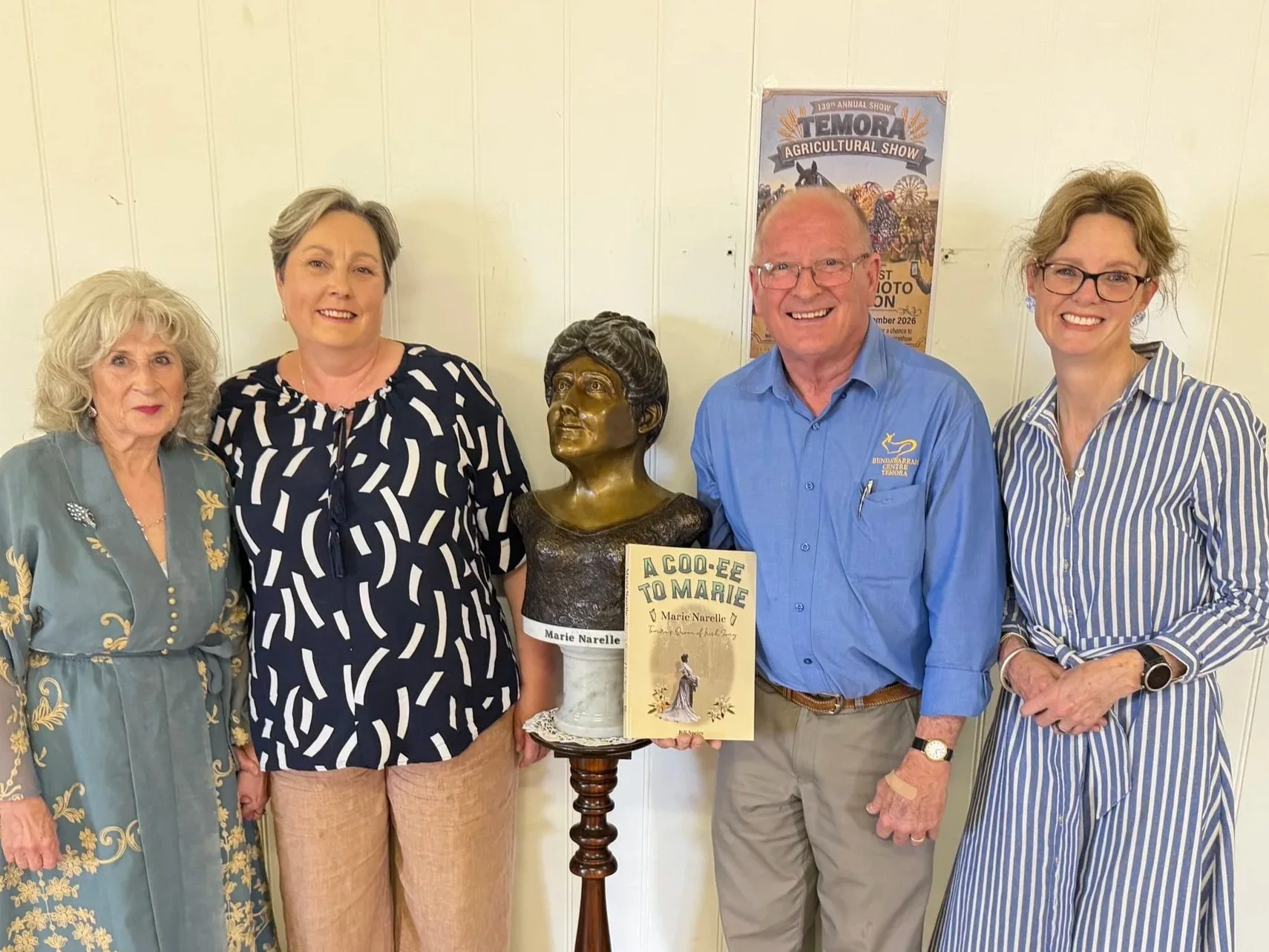
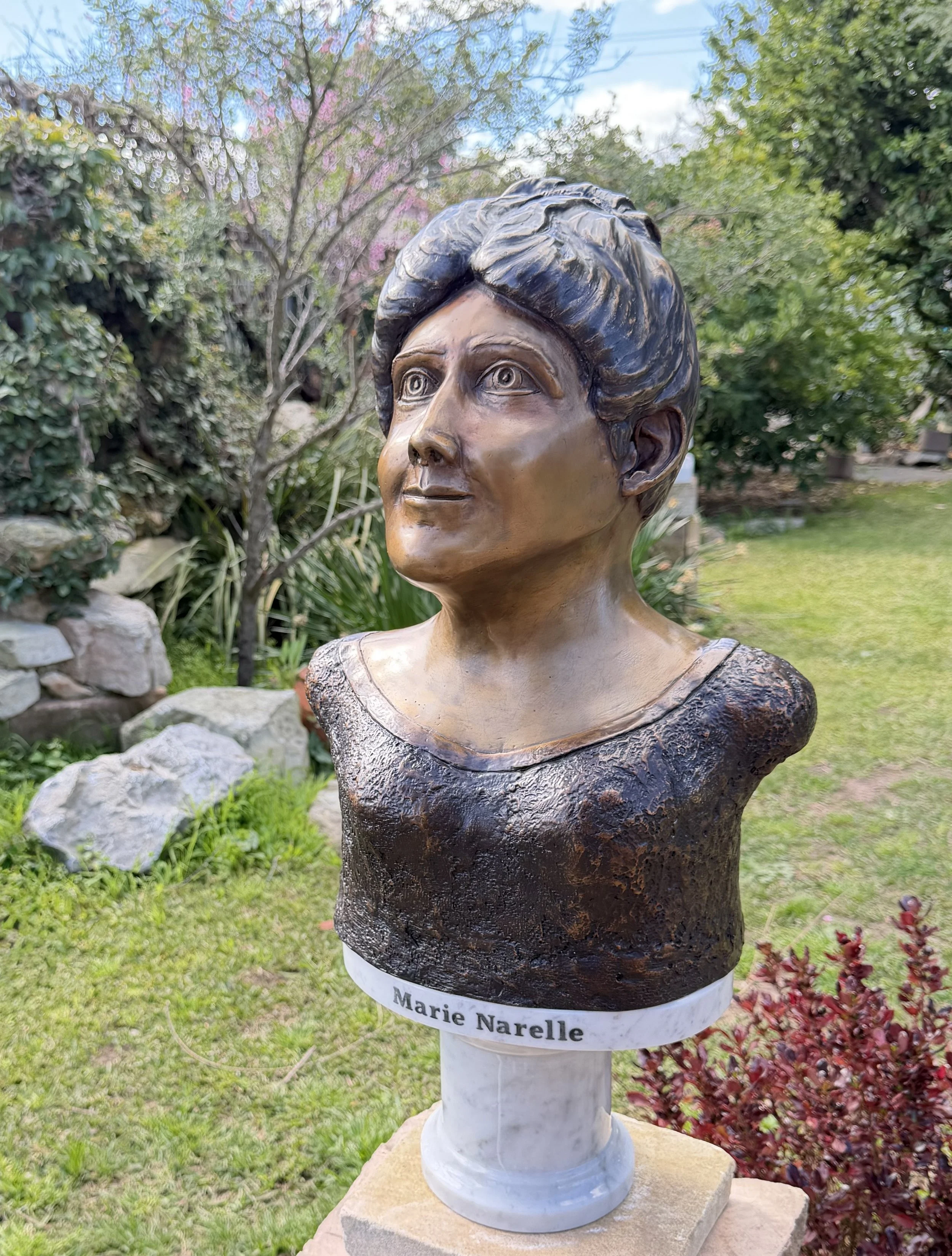
Marie Narelle is one of Temora, NSW’s remarkable stories. Born in 1870, she became known as the “Australian Queen of Irish Song”, taking her music from the Riverina to audiences around the world.
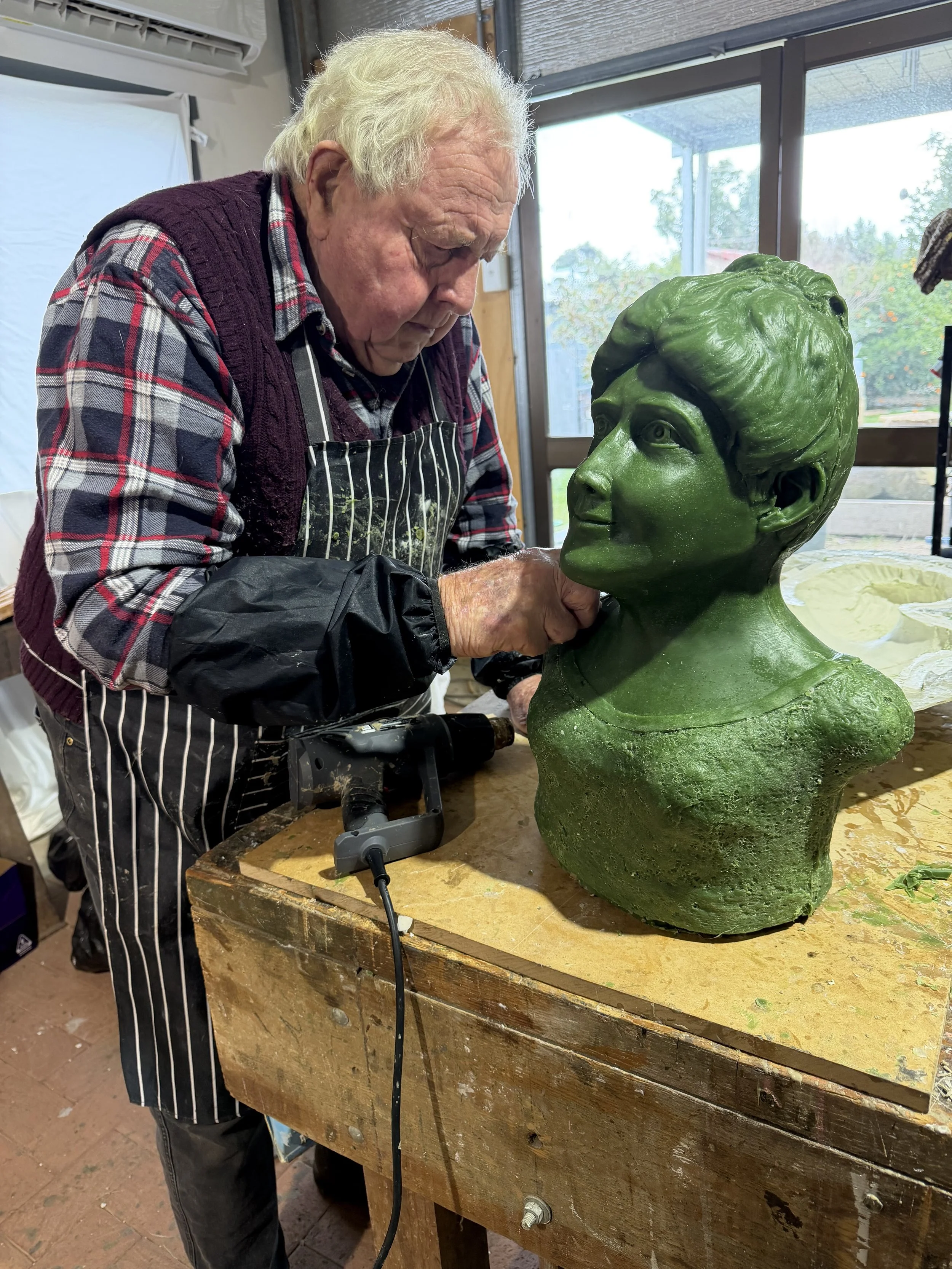
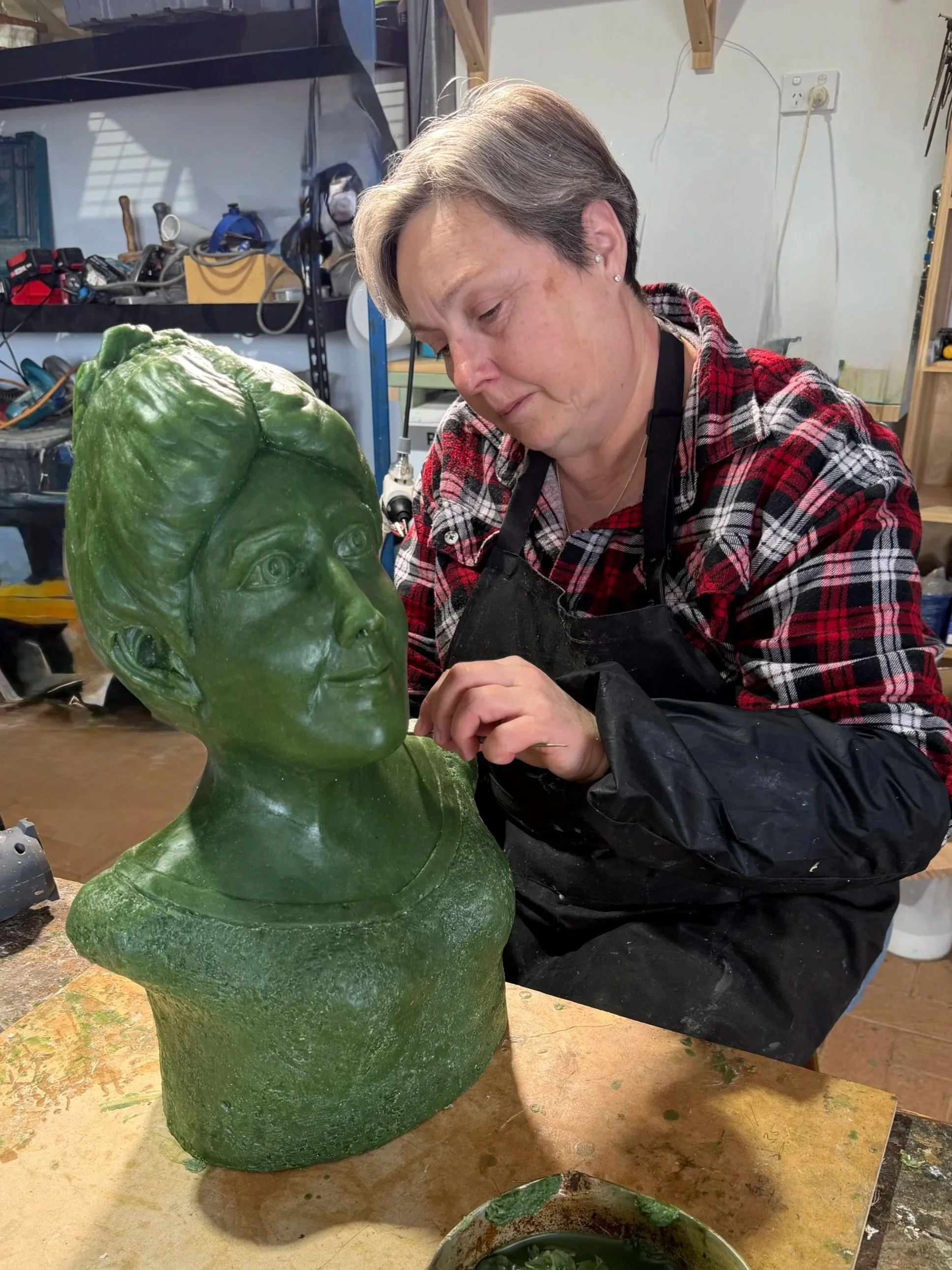
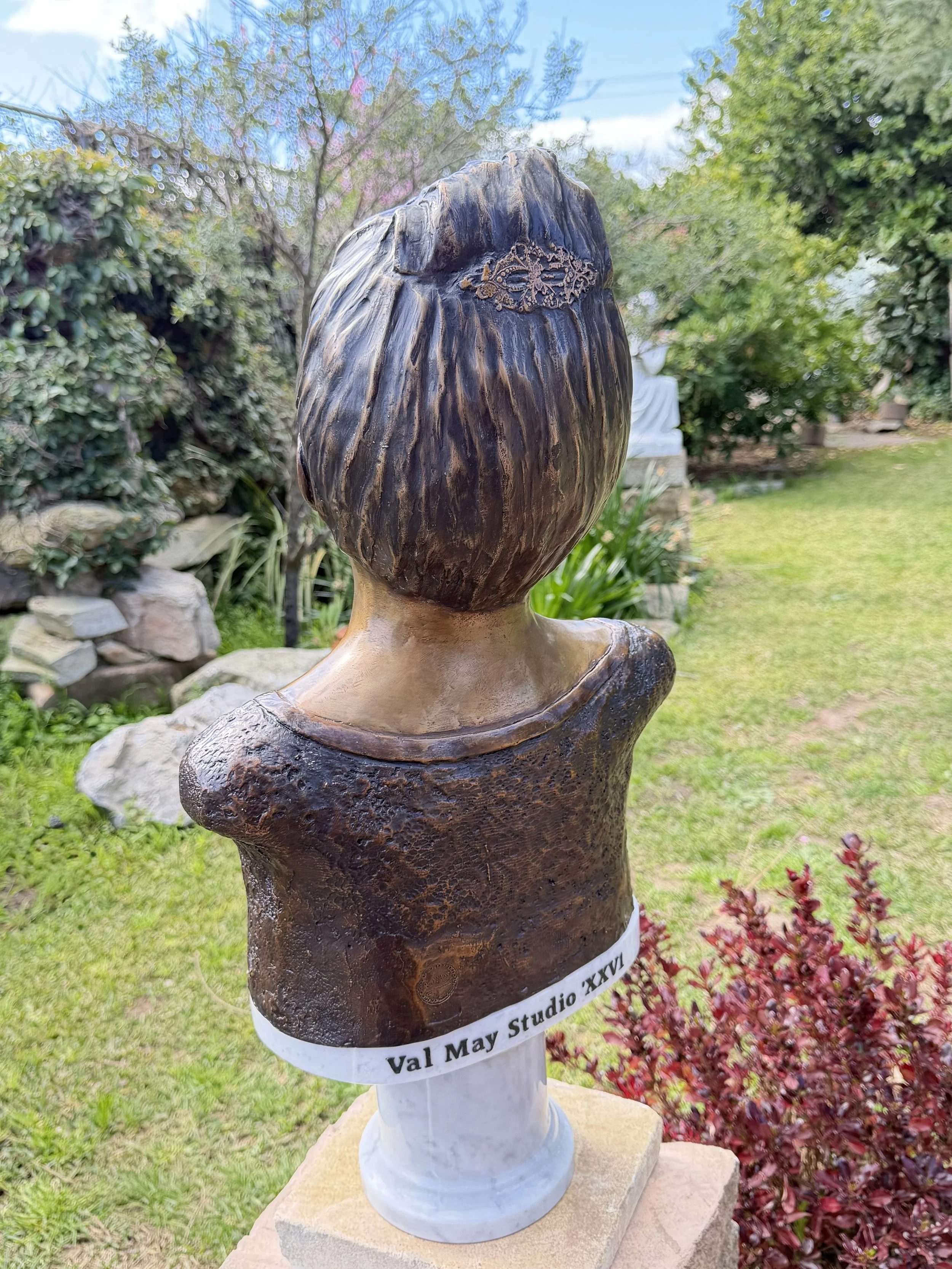
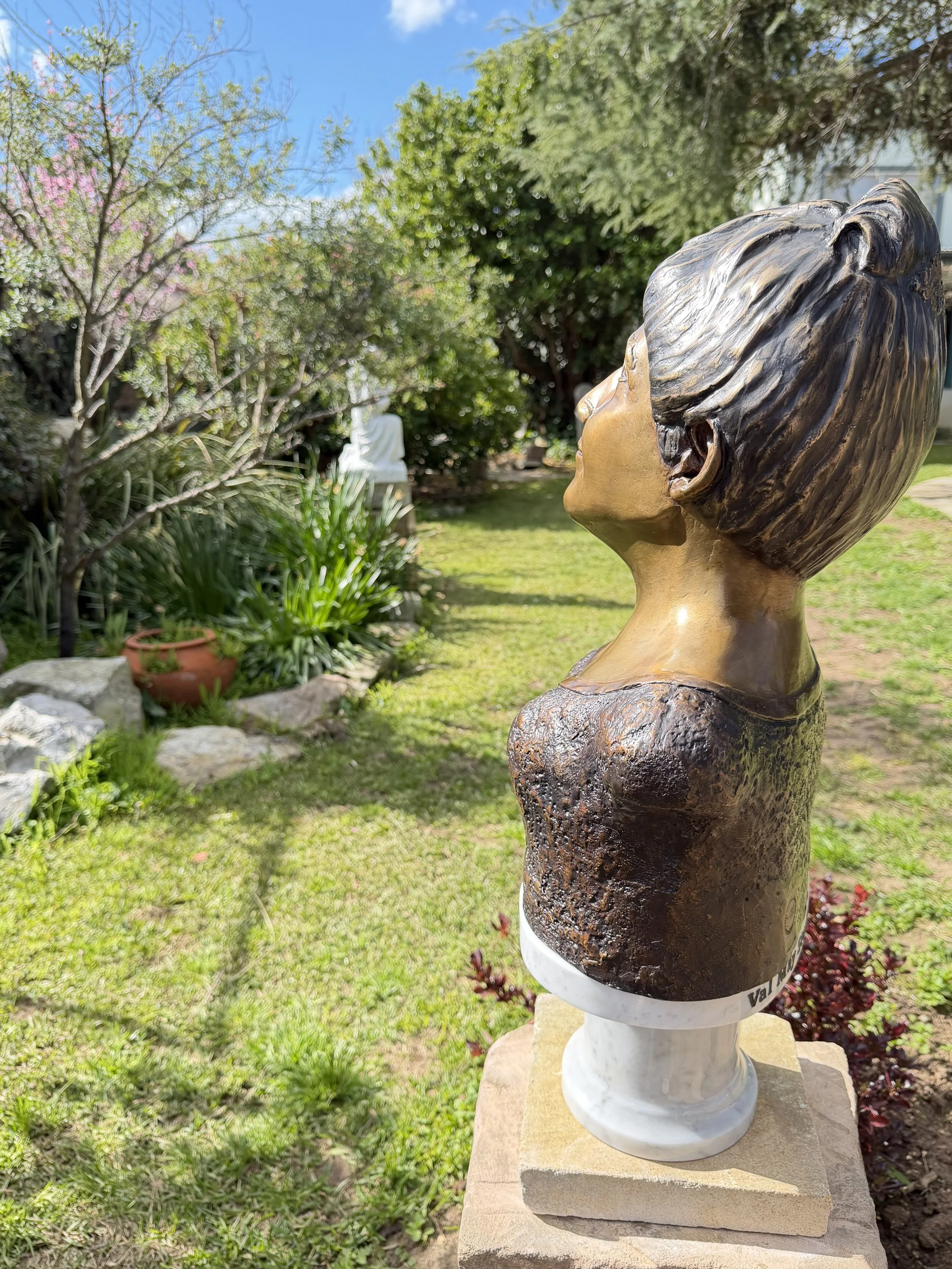
To help bring Marie’s story home, Val May Studio created this distinctive coloured bronze bust as a fundraising artwork towards a life-size sculpture for Temora.
Carefully capturing Marie’s characteristic head tilt, period hairstyle and delicate details of her dress, and hair clips, the bust goes beyond likeness to capture something of her presence and personality. The warmth and colour of the bronze bring her character to life. When Marie’s grandson saw the finished bust, he was deeply moved, feeling as though his grandmother had come back to life.
Purchased by a private collector, the bust also helps support the larger project, with Val May Studio donating a contribution from the sale.
Carl and Kim have thoroughly enjoyed working together on this special project, collaborating with the Temora Historical Society, local community and Marie’s family in the USA through Zoom. Sharing stories, photographs and family insights across the miles has made this a particularly rewarding experience. Val May Studio continues to work alongside them to bring the life-size sculpture to life, creating a lasting artwork celebrating one of Temora’s most remarkable daughters.
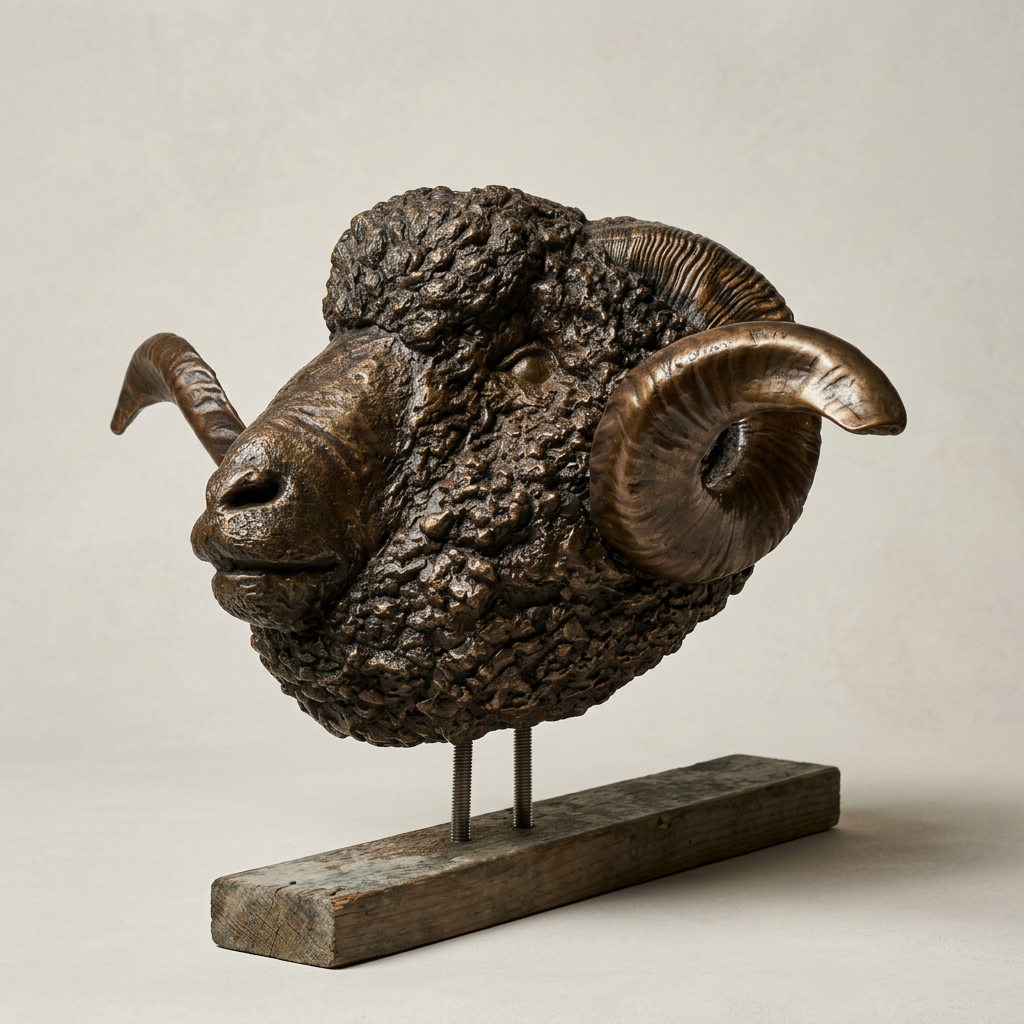
Crookwell Ram’s Head Sculpture - Crookwell, New South Wales
The studio created the permanent bronze Merino Ram’s Head sculpture, celebrating the agricultural heritage of the region and the importance of Australia’s wool industry.
The sculpture was created with a bespoke Grenfell granite plinth, combining artistic craftsmanship with regional storytelling.
Sir Donald Bradman Sculpture
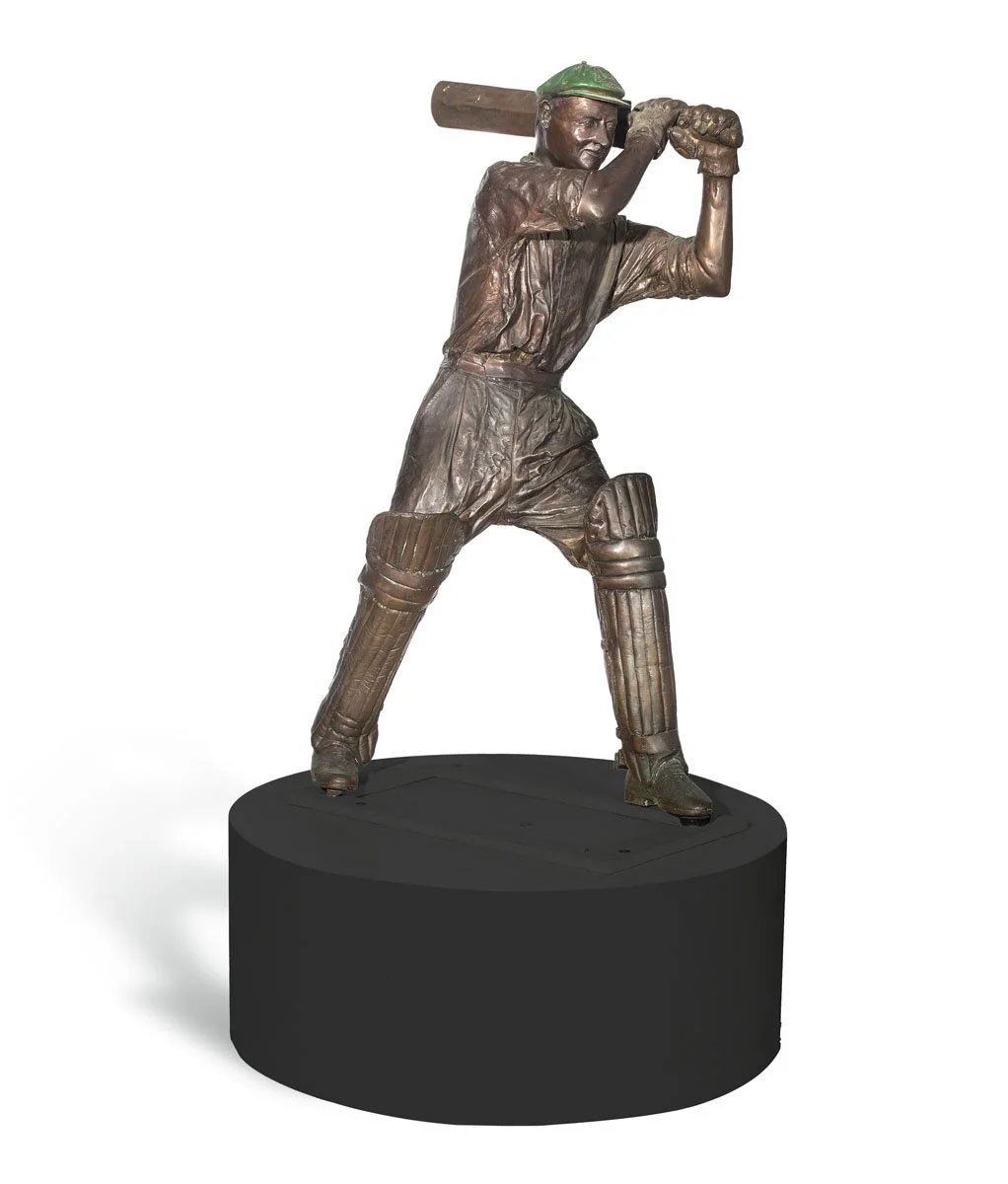
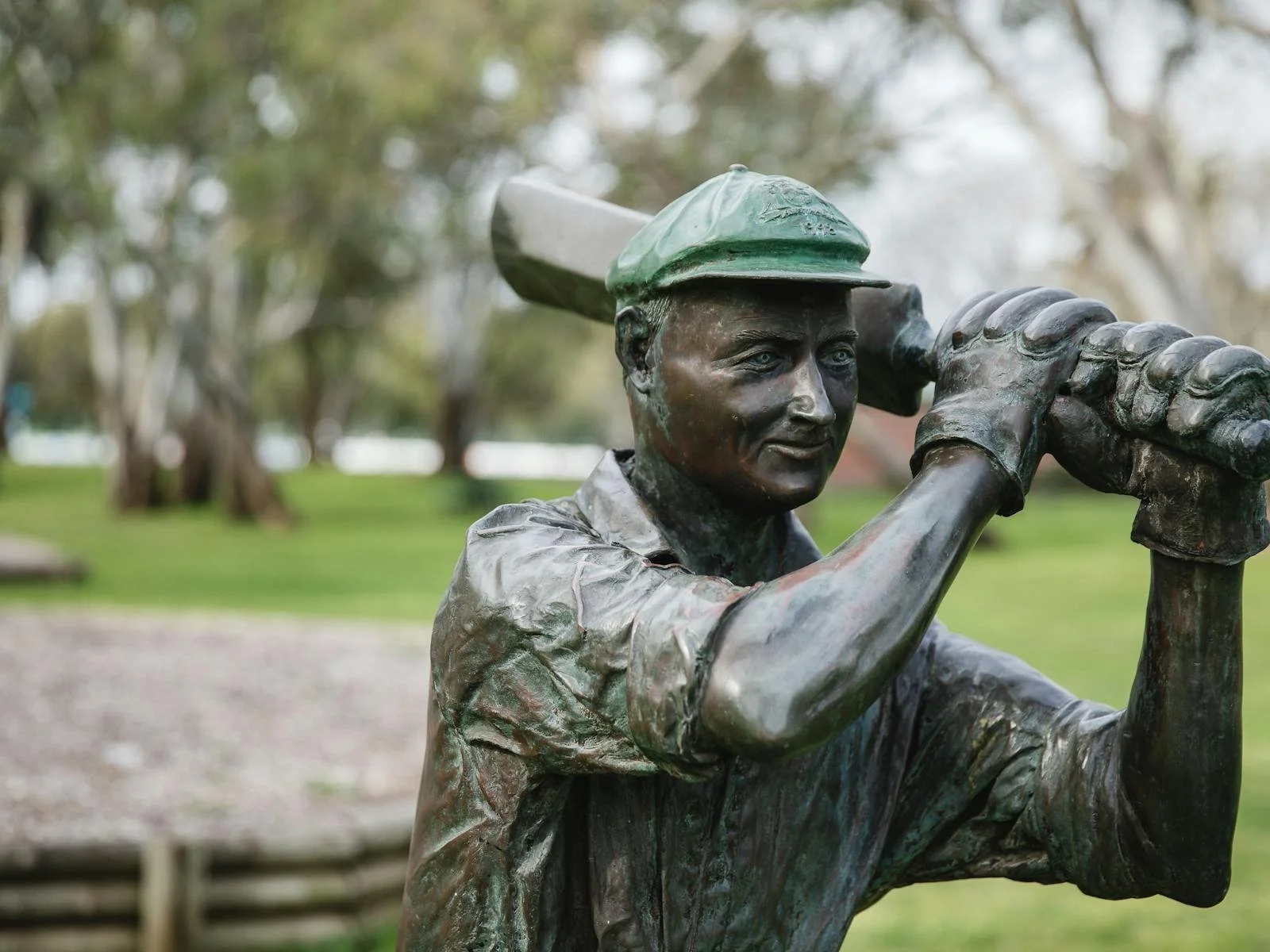
The studio’s sculptural heritage includes a life-size public sculpture honouring Australian cricket legend Sir Donald Bradman.
Capturing Bradman’s character, presence and contribution to Australian sporting history, the work reflects the studio’s ability to create sculptures that preserve the stories and personalities of significant Australian figures.
A second sculpture of Sir Donald Bradman was also commissioned by Russell Crowe for his private collection, further recognising the studio’s ability to create highly detailed and meaningful works for both public spaces and private collectors.
Balancing Rocks, Young NSW
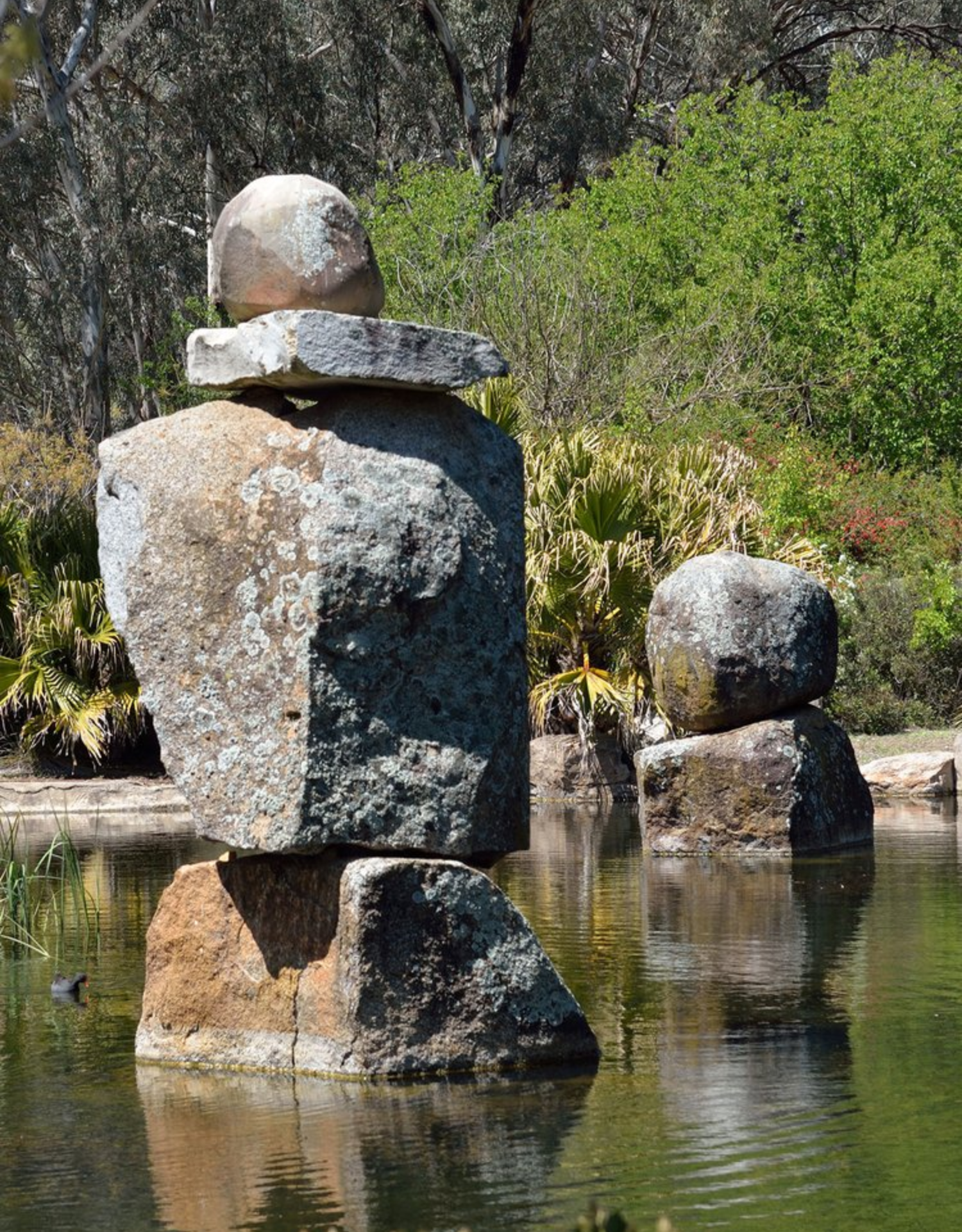
In the heart of the Chinese Tribute Gardens in Young, the National Cherry Capital, stands a remarkable sculpture crafted by Carl Valerius.
The sculpture, Carl titled "The Modern Prosperity of Young," was a testament to the harmonious blend of tradition and progress.
Balanced meticulously atop a foundation of rocks, it symbolized unity, creativity, and the enduring spirit of the community. Carl had previously embarked on a transformative journey during the creation of the magnificent Chinese Tribute Gardens at Sydney Harbour. It was there that he had the extraordinary opportunity to meet a master craftsman named Mr. Woo.
Mr. Woo was renowned for his deep understanding and ancient knowledge of the art of balancing rocks. The experience of working with Mr Woo on this project ignited a passion within Carl, inspiring him to push the boundaries of his own creativity.
Carl embarked on a mission to create a sculpture that would both pay homage to the thriving cherry industry in Young and to the vibrant and harmonious community it nurtured. He sought to blend the artistry he had learned from Mr. Woo with the unique essence of Young, capturing its essence in stone.
Carl carefully selected rocks that would symbolize the various facets of Young's prosperity. The bottom-most rocks formed a sturdy and harmonious foundation, representing the rich soil, the hardworking people, and the unwavering determination that had shaped the town's success.
To achieve the intricate balance required for his vision, Carl employed the assistance of a powerful crane. With meticulous precision, the rocks were positioned one by one, carefully balancing them upon each other. It was a delicate dance, a dance of strength and finesse, as the rocks found their rightful place in the sculpture. Carl delicately positioned two rocks together at the top, forming a representation of a cherry perched upon a plate. This crowning element served as a vivid symbol of Young's title as the National Cherry Capital, celebrating its achievements, commitment to excellence, and the sweet rewards reaped from generations of hard work.
When Carl unveiled his sculpture, the town of Young stood in awe. They marvelled at the delicate balance of the rocks, the fusion of Chinese tradition with their own local identity. The sculpture became an icon of pride, drawing visitors from far and wide to witness the harmonious marriage of cultures and the stunning artistry on display. Carl Valerius's creation became an integral part of the Chinese Tribute Gardens, an enduring symbol of the shared heritage and the fusion of cultures.